
Rice Mill Yield & Milling Recovery: How to Calculate It
By Mithun K. Singh, Founder, Svasamm Research · 14 July 2026
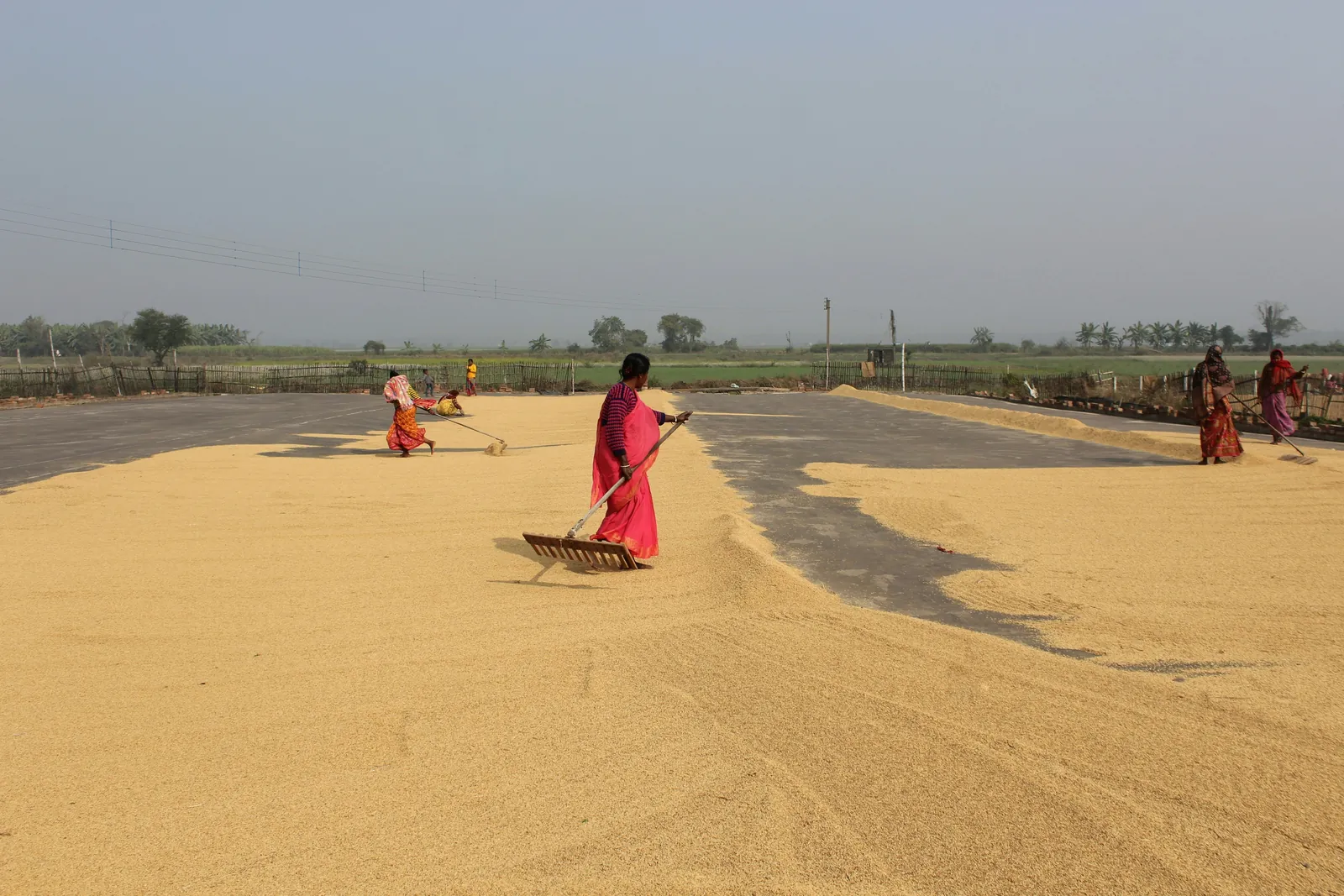
Milling recovery — the out-turn ratio — is how much sellable rice you get from paddy: under government procurement it's a fixed 67% for raw rice and 68% for parboiled, per 100 kg of paddy. It is also the single number that decides whether a mill makes money — a one-percent gain on thousands of quintals is real profit, and a one-percent unexplained loss is money walking out of the gate. Here is how to calculate yield and recovery, what a good figure is, and why tracking it per batch is where mills find their margin.
What "recovery" actually means
Milling recovery is the share of your paddy input that comes out as sellable rice. There are two figures every miller should track, and they are not the same:
- Total milling recovery — all milled rice (whole + broken) as a percentage of paddy.
- Head rice recovery — only the whole, unbroken grains as a percentage of paddy. Head rice sells for far more than broken, so this is your quality number.
The difference between the two is your broken-rice percentage. A mill can have healthy total recovery but poor head-rice if the paddy is over-dried or machines are misadjusted — and it quietly loses money on every batch.
The formulas
A worked example
Feed 1,000 kg of paddy into a milling run and collect the output:
| Output | Weight | As % of paddy |
|---|---|---|
| Head (whole) rice | 620 kg | 62% (head rice recovery) |
| Broken rice | 60 kg | 6% |
| Total milled rice | 680 kg | 68% (total recovery) |
| Bran | 80 kg | 8% |
| Husk | 200 kg | 20% |
| Moisture loss / dust | 40 kg | 4% |
Here total recovery is 68% and head rice is 62% — a broken-rice gap of 6%. The by-products (bran, husk, broken) are not waste; they are a second revenue stream to account for separately.
What is a good recovery?
- Total milled rice recovery: 67–72% on clean, correctly conditioned non-basmati paddy.
- Head rice recovery: 60–66%.
- Poorly fissured, cracked, or over-dried paddy can pull total yield below 60% — a large, avoidable loss.
Under CMR, millers must deliver a fixed out-turn (67% for KMS 2024–25). If your actual recovery runs below the assumed rate, you absorb the shortfall — which is exactly why measuring real recovery matters.
How to measure it accurately (not guess it)
- Run a controlled test batch of a known, precisely weighed quantity (100 kg is practical) of a single paddy variety.
- Weigh every output stream: head rice, broken, bran, husk, and the balance.
- Record moisture and variety — the same machine gives very different recovery on 17% vs 22% moisture paddy.
- Compare planned vs actual extraction per run, broken down by machine, shift, operator and lot.
What drives recovery up or down
- Moisture at milling — paddy milled too wet or too dry both cost you. The practical milling window is roughly 13–14% moisture; over-dried grain fractures and turns head rice into broken.
- Paddy variety and grade — long-slender, coarse and parboiled paddies all mill differently. A recovery figure only means something against a known variety.
- Fissured or cracked grain — cracks from sun-drying or rough handling show up as breakage in the whitener, not in the paddy weight — so the loss is invisible until the head-rice number drops.
- Machine adjustment — worn rubber rolls on the sheller and an over-aggressive whitener quietly shave head rice off every batch.
- Degree of milling — polishing harder gives whiter rice but lower yield; there is a real trade-off between appearance and out-turn.
- Foreign matter — stones, straw and immature grain inflate the paddy weight, so real recovery looks worse than it is unless intake is cleaned and graded first.
The by-products are a second P&L
Recovery is only half the money. Every 100 kg of paddy also yields roughly 8% bran and 20% husk, and those are revenue, not waste. Bran is sold to solvent-extraction plants for rice-bran oil; husk is burned as boiler fuel (many parboiling mills are effectively self-powered on their own husk) or sold for power and board-making; broken rice has its own market in breweries, food processing and feed. A mill that books bran, husk and broken as separate stock with their own sales — rather than lumping them into a vague 'by-product' line — often finds a surprising share of its margin sitting there. Under-measuring by-products is as expensive as under-measuring rice.
Head rice versus broken: the price gap is the point
Head rice and broken rice can differ substantially in price, so the split between them matters as much as the total. A mill can hit a healthy 68% total recovery and still lose money if too much of it is broken — because the same tonnage sold as broken fetches materially less than whole grain. That is why head-rice recovery, not just total recovery, is the number to defend. Chasing a whiter, harder-polished grain can nudge total recovery down while lifting the head-rice share and the average selling price — which is the trade-off worth measuring rather than guessing.
Why a per-batch number beats a seasonal average
A single season-end recovery figure tells you almost nothing you can act on. The useful question is which variety, which shift, which machine and which moisture band are dragging the average — and that only shows up if recovery is captured batch by batch. Track it per lot and a 2% gap stops being a mystery you absorb and becomes a specific cause you can fix: a drier that's running too hot, a sheller due for new rolls, a supplier whose paddy carries more foreign matter than the intake ticket admits.
Get a free milling-recovery review
Share a test batch's numbers — paddy in, head rice, broken, bran, husk — and we'll break down where your recovery is slipping and what it's costing you, plus how Millingo tracks yield per lot, machine and shift automatically. Free, no obligation.