
Custom Milled Rice (CMR) Explained: The Complete Process for Millers
By Mithun K. Singh, Founder, Svasamm Research · 14 July 2026
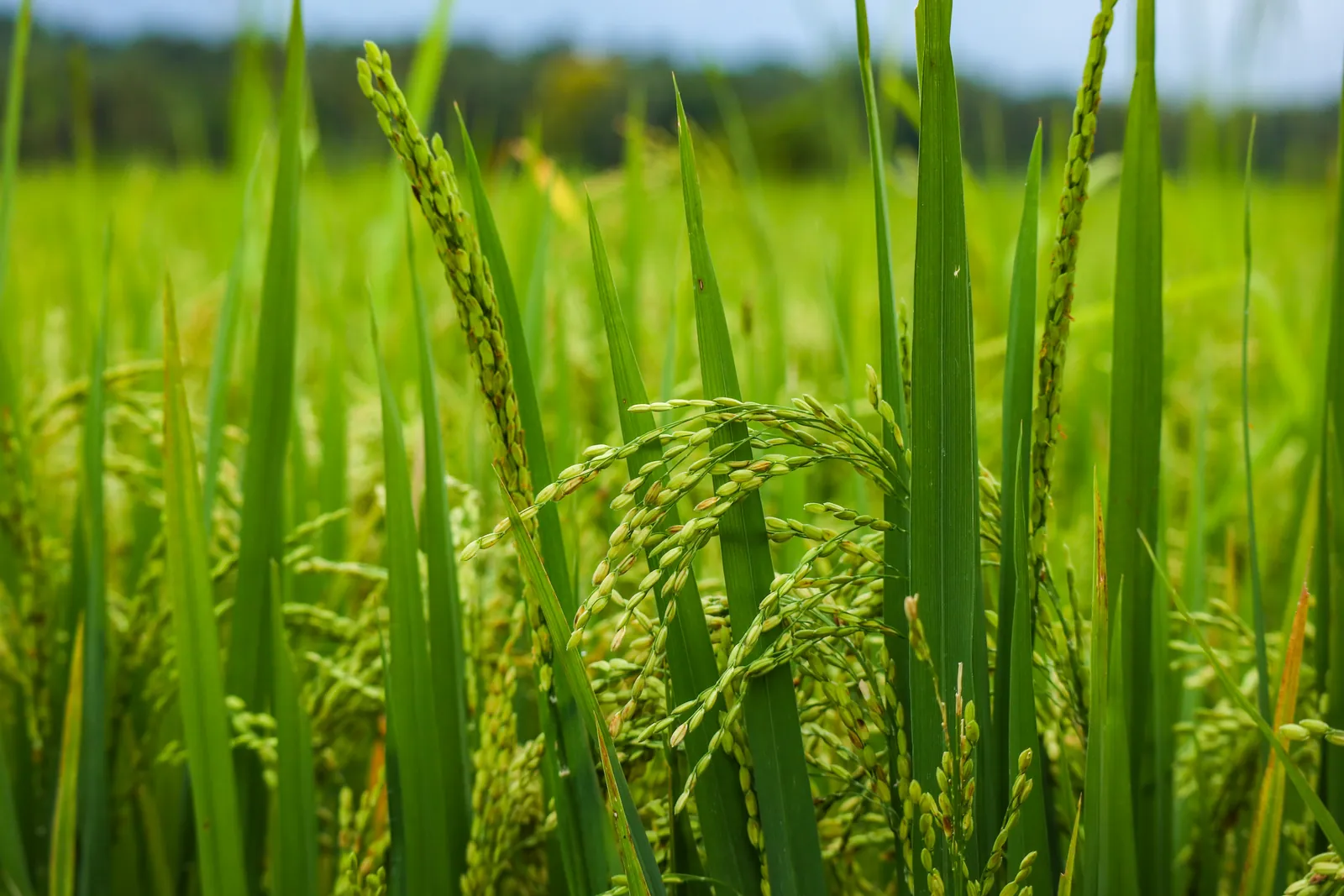
CMR (Custom Milled Rice) is the rice a mill produces from government-procured paddy and returns to FCI or a state agency at a fixed out-turn ratio — 67% for raw rice, 68% for parboiled, per 100 kg of paddy. The miller doesn't own the paddy; they earn a milling charge. This guide explains the CMR process end to end: what you must deliver, the season schedule, how it differs by state, and where mills lose money.
What is Custom Milled Rice (CMR)?
Under CMR, the government — through the Food Corporation of India (FCI) and state agencies — buys paddy from farmers at the Minimum Support Price (MSP) and gives that paddy to selected private rice mills to mill on its behalf. The miller does not own the paddy; it mills the government's paddy and delivers finished rice back into the central pool, earning milling charges (and keeping by-products, subject to state rules).
This is fundamentally different from open-market milling, where the mill buys its own paddy and sells its own rice. Under CMR you handle someone else's grain against a strict obligation — so tracking allotment, milling and delivery accurately is not optional.
The miller's core obligation: 67% + 1% FRK
For Kharif Marketing Season (KMS) 2024–25, a miller must deliver 67% rice against the total paddy allotted, of which 1% must be Fortified Rice Kernels (FRK). In plain terms: for every 100 quintals of paddy you receive, you owe 67 quintals of rice back to the pool.
The delivery schedule
CMR delivery is staged across the season so the government receives rice steadily. For KMS 2024–25 the schedule ran roughly:
| By end of | Cumulative rice to be delivered |
|---|---|
| November | 15% |
| December | 40% (a further 25%) |
| January | 65% (a further 25%) |
| February | 90% (a further 25%) |
| 15 March | 100% (final 10%) |
Missing a milestone risks penalties and affects future allotment, so mills need a live view of 'delivered vs due' at every checkpoint — not a spreadsheet reconciled after the fact.
How CMR differs by state
The CMR concept is national, but procurement runs through state portals and agencies, and the rules differ in the detail:
- West Bengal — procurement via the e-Paddy portal (epaddy.wb.gov.in), with agencies such as WBECSC and BENFED.
- Uttar Pradesh — procurement through the Food & Civil Supplies Department (fcs.up.gov.in), using biometric E-PoP devices at purchase centres.
- Odisha — procurement operated through OSCSC.
- Bihar — PACS-based procurement via esahkari.bihar.gov.in with the SFC.
Where mills lose money and fall out of compliance
- Allotment vs delivery drift — losing track of exactly how much paddy was allotted, milled, and delivered against each memo.
- Out-turn shortfall — real recovery below the assumed rate, quietly funded by the miller.
- The 7.1 / out-turn reconciliation — the final settlement that ties allotted paddy to delivered rice and by-products; errors here trigger recovery notices.
- Security deposit & physical verification — staying audit-ready against stock checks.
Who's who in CMR procurement
A miller deals with several bodies, and it helps to know which does what. The Food Corporation of India (FCI) owns the central pool the rice ultimately feeds. State agencies and co-operative societies run the farmer-side purchase and the miller-side delivery. In West Bengal, for example, farmers sell through primary societies — PACS, PAMS, LAMPS, SHGs and FPOs — while millers deliver their finished CMR to state agencies such as WBECSC, BENFED, CONFED, NAFED and PBAMCL. Every state has its own equivalent set of bodies. Knowing which agency issues your allotment memo and which one receives your rice is the difference between a clean delivery and a rejected consignment.
How a miller is registered and allotted paddy
Before any paddy moves, a mill must be registered with the state procurement system — in West Bengal that is done online at procurement.wbfood.in, capturing the mill's location, capacity and miller details. Once registered and empanelled, the mill receives paddy against allotment memos through the season. Each memo is a specific quantity of paddy tied to a specific rice-delivery obligation. So the discipline the whole season rests on is simple to state and hard to do by hand: for every memo, know exactly how much paddy came in, how much rice has gone back, and how much is still owed.
Milling charges: how the miller actually earns
This is the point most people outside the trade miss. Under CMR the miller never owns the grain and is not paid for the rice. The miller is paid a milling charge for converting the government's paddy into rice, sometimes topped up by a state incentive. The by-products — bran, husk and broken rice, subject to each state's rules — are usually the miller's to sell, and for many mills that by-product income is the real margin. The economics of a CMR mill are therefore not 'buy low, sell high'; they are 'hit the out-turn, control costs, and monetise the by-products' — which is exactly why measuring recovery to the batch matters.
Gunny bags and delivery logistics
CMR is delivered in the bags the agency specifies, and the bag itself is accounted for. In West Bengal the delivery agency (WBECSC) arranges the jute gunny bags, and millers must deliver CMR in those supplied bags — so empty-bag receipts and returns become their own small ledger that has to reconcile alongside the rice. Multiply a per-bag discrepancy across a season's tonnage and this 'bardana' accounting stops being trivial. A mill that tracks bag issue, fill and return against each delivery avoids the awkward end-of-season gap where the bag count doesn't match the rice count.
The out-turn reconciliation, in plain terms
At the close, every kilogram has to tie out: paddy allotted equals rice delivered at the out-turn rate, plus the accounted-for by-products, plus any recorded process loss. This final reconciliation — millers often refer to it by its form number — is where a season's worth of small gaps surface at once. If your registers were kept lot by lot as the season ran, it is an afternoon's work; if they weren't, it is weeks of reconstruction under a recovery-notice deadline. The reconciliation doesn't create the shortfall — it reveals one that was building invisibly all season.
What happens if a mill falls short
- You fund the shortfall — rice you couldn't recover from the paddy still has to be delivered, so it comes out of your own stock or pocket at market rates.
- Recovery notices — the reconciliation triggers a demand for the value of undelivered rice, often with interest.
- Security deposit at risk — the deposit lodged to secure the allotment can be adjusted against dues.
- Reduced future allotment — a poor delivery record affects how much paddy — and therefore how much milling-charge income — you're given next season.
Get a free CMR out-turn review
Send us a season's paddy-in and rice-out for a few lots and we'll show you where your out-turn is leaking against the 67% norm — and how Millingo tracks it lot by lot, so a shortfall surfaces daily instead of at reconciliation. No cost, no obligation.